25 November 2026 • edit-table diaries
Energy Video Production in Bangladesh: Films That Power Trust
চা নিয়ে বসুন — ৪ মিনিটের পড়া ☕
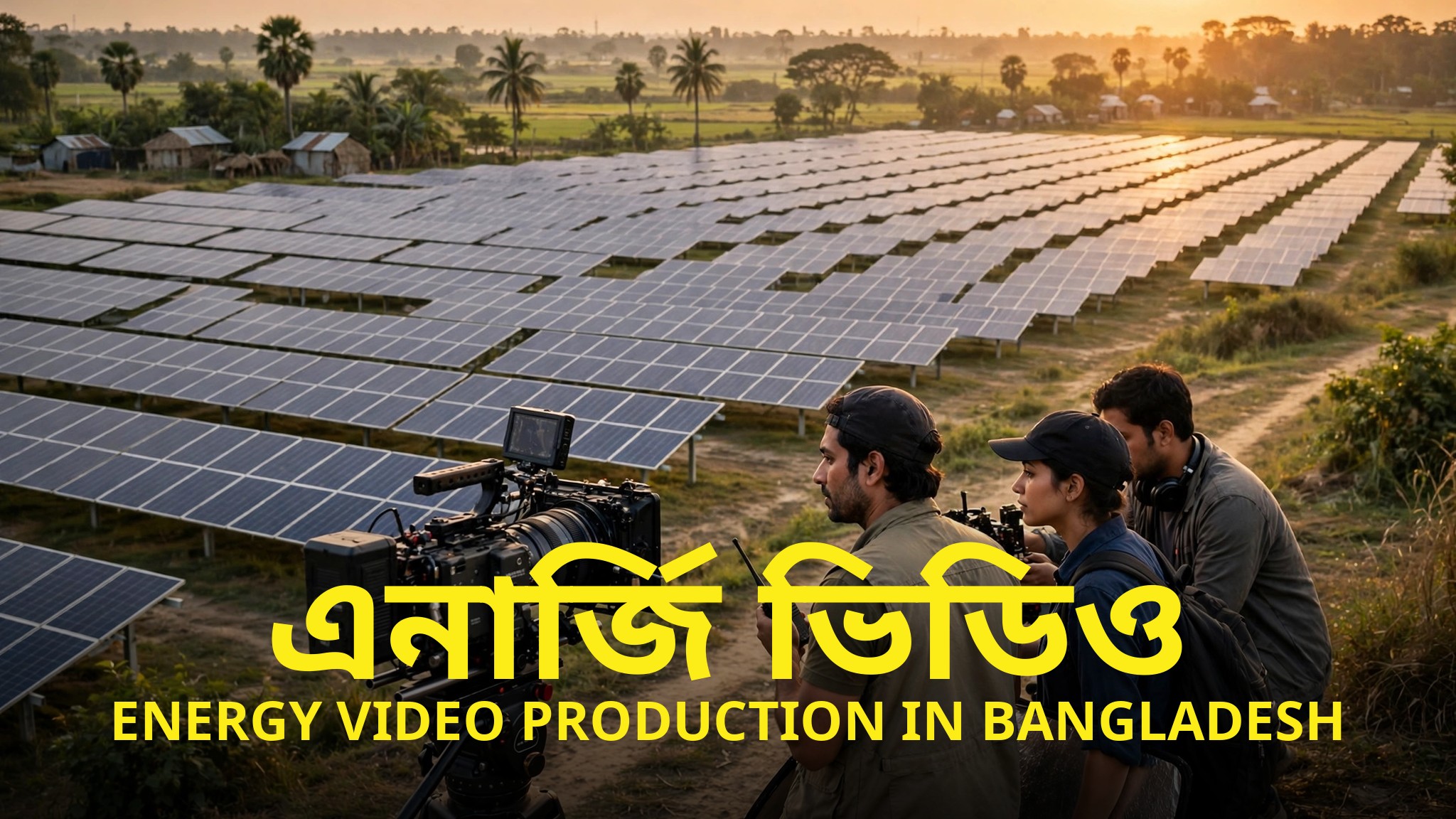
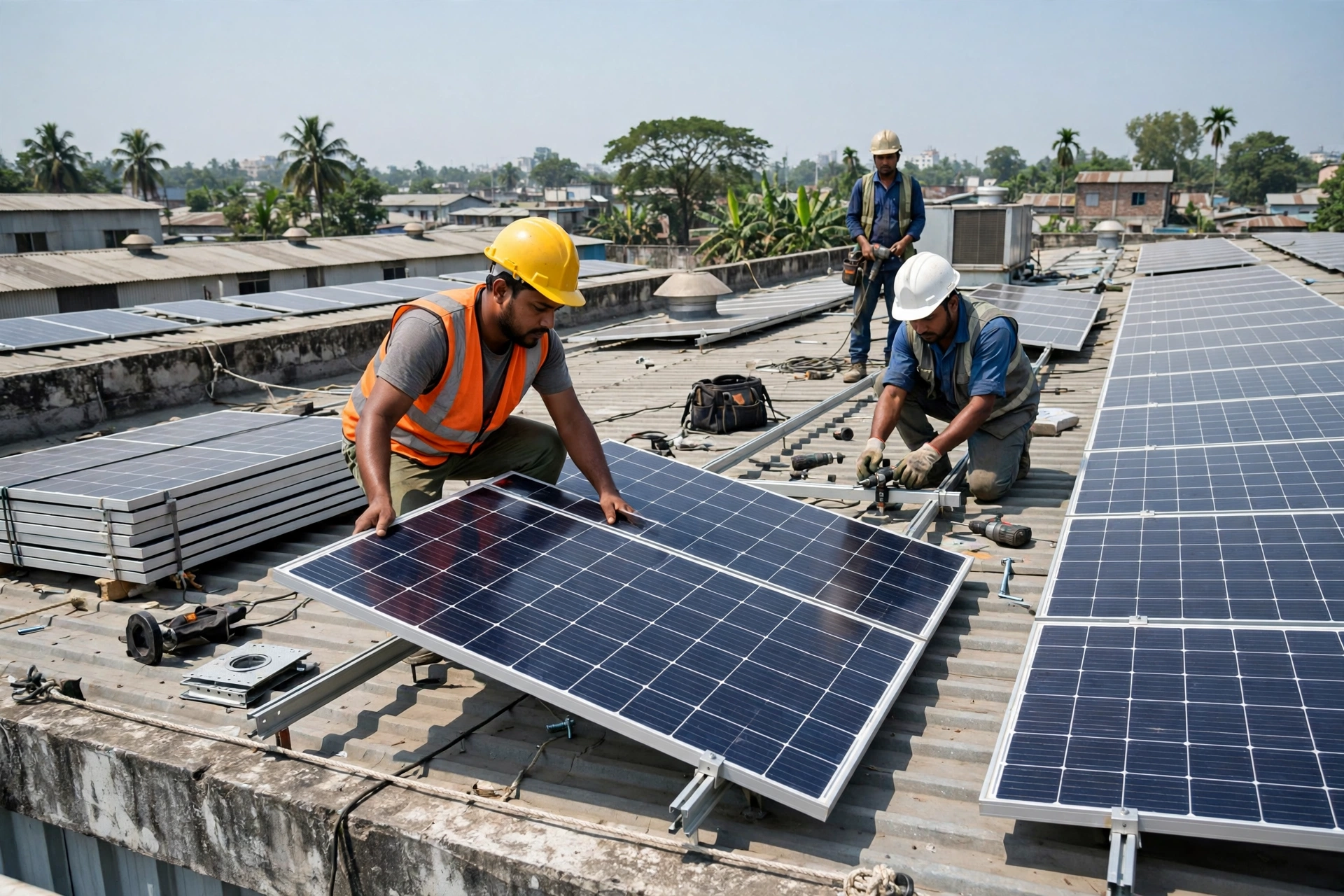
Nobody can see electricity. A power station, a gas field, a rooftop full of solar panels — the work they do is invisible, and the companies behind them are judged on trust rather than on anything a customer can hold in their hand. That is the whole problem of energy video production in Bangladesh: the product is reliability, safety and scale, and none of those things photograph themselves. A utility, a power producer or a renewables company cannot show its customers a product on a shelf. It can only show them the people, the plant and the discipline behind the power — the control room at 2 a.m., the engineer who knows every valve by sound, the solar crew working a rooftop in the heat. In a sector where a single incident can undo years of reputation, the companies that win public and investor confidence are the ones whose films prove their standards instead of just claiming them.
The formats that carry the current
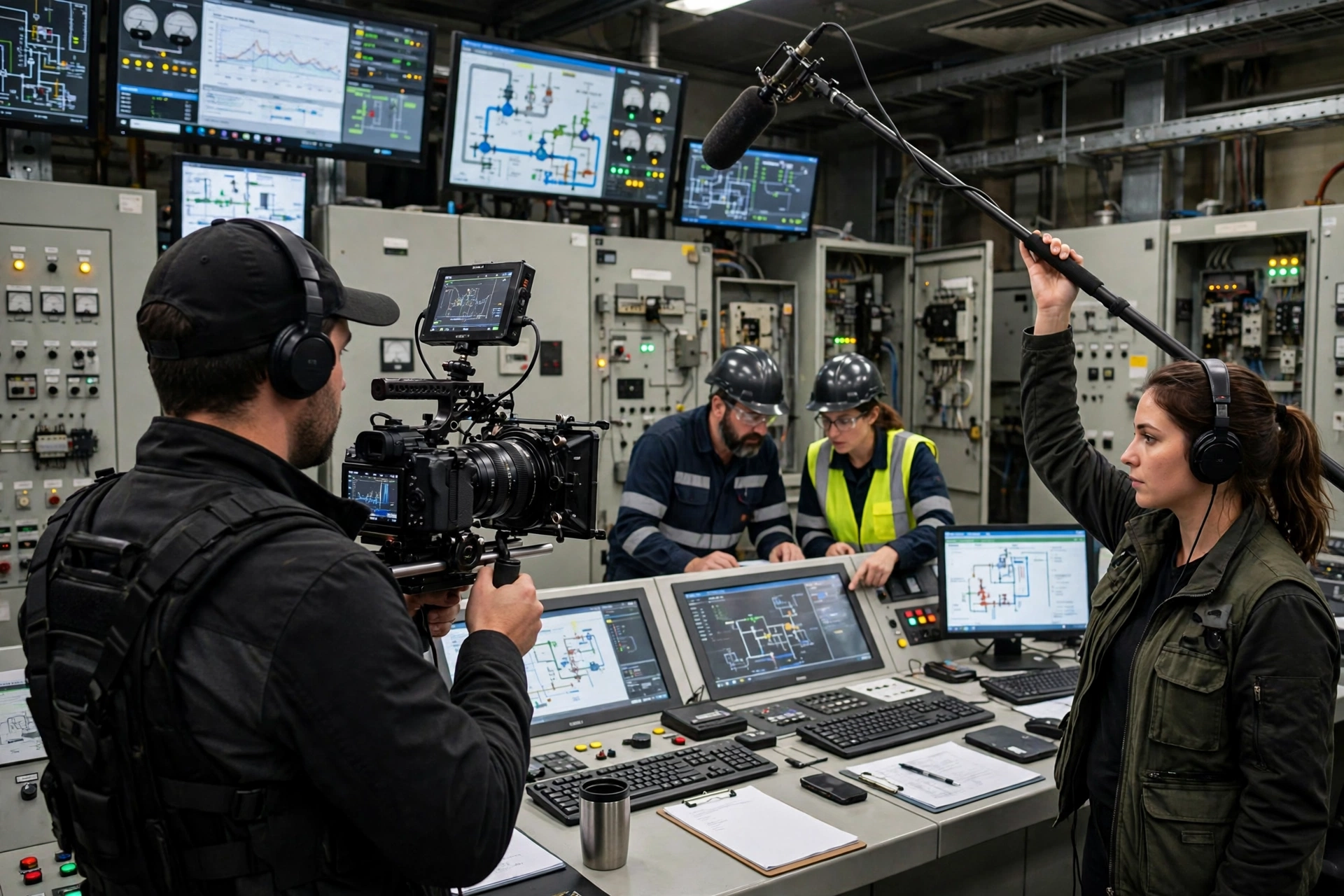
The corporate and facility film. The flagship asset: a 60–90 second film that takes a viewer inside the operation — the plant, the control room, the field team — and leaves them with one impression: this company is in control of something serious. This is the film that runs on the company website, in investor meetings and at industry events, and it is the film a regulator, a lender or a partner watches before deciding the company is serious.
The project film. Energy in Bangladesh is built project by project — a new plant, a new solar installation, a new gas connection. A project film documents the build honestly: the ground-breaking, the engineering, the first power flowing. It gives the company a record it can show the next client, the next lender and the next community, and it turns a construction site into proof of delivery.
The safety and training film. Energy work is dangerous work, and training video is where video directly prevents accidents: induction films for new site workers, lockout and permit procedures, emergency drills, safe working at height and around live equipment. A good safety film is watched on a phone at the site gate before the shift starts — short, in plain Bangla, impossible to misunderstand. (Our corporate training guide covers the format; for energy, the stakes are what make it non-negotiable.)
The stakeholder and community film. Power plants, gas fields and solar farms sit in somebody's neighbourhood. A film that shows the local jobs, the community programmes and the environmental care — real people, real places, no stock footage — is what turns a project from an imposition into a neighbour. This is the film that plays at public meetings, where a slick corporate film would be laughed out of the room.
The explainer video. Animation-led or presenter-led explainers that do what no brochure can: show, in two minutes and in plain Bangla, how rooftop solar works for a factory, what a gas connection involves, or how a bill is actually calculated. Confusion is the main reason a customer never signs up — and the explainer is where that confusion gets removed.
The recruitment film. Energy companies run on engineers, technicians and field crews, and those people are recruited by video: films that show what a day actually looks like on a plant or a rooftop, how the training works, and what a career in the sector really offers. A good recruitment film fills a roster for a season.
The craft specifics
- Safety is the shoot plan, not a footnote. A power plant is a live industrial site. Every shot needs the site manager's sign-off, every crew member needs the right PPE and a safety briefing, and no camera ever stands where a vehicle, a crane or a live line is about to move. Get the safety plan agreed before the shoot, not on the day — and film the safety culture itself, because that is what the audience is actually judging.
- Permissions come first. Energy sites are restricted sites. Access, drone clearance, photography rules and escort requirements must be settled in pre-production, with the client's security and communications teams in the same conversation. A shoot that gets stopped at the gate wastes the whole day and the whole budget.
- Film the real operation, not a set. An energy film shot in an empty control room with two actors in new hard hats convinces nobody. Shoot during a real shift, with the real staff, in the real noise — and plan the shoot so it never stops the work. The crew works around the operation; the operation does not stop for the crew.
- Make the invisible visible. Electricity cannot be filmed, so film what it does: the meter spinning, the lights coming on in a village at dusk, the factory line running, the pump starting. Macro shots of switchgear, turbines and panel connections give the film its texture; the human moments give it its meaning.
- Plain Bangla first, jargon never. "Grid synchronisation", "capacity factor", "net metering" — these words mean nothing to a factory owner in Gazipur deciding on rooftop solar, or a householder wondering what a new connection involves. Every script must pass the test: would that person understand it on first hearing? If not, rewrite it. Subtitles in Bangla and English are not optional — most viewers watch on mute.
- Show the scale honestly. Energy is a story of scale — a field of panels, a row of turbines, a control room full of screens. Drone and wide shots earn their place here, but only with the permits in hand and the safety case made. A drone shot taken without clearance is not a great shot; it is a liability.
- Real engineers, not models. An energy film lives or dies on whether the viewer believes the person on screen knows the plant. Cast real engineers, technicians and field staff (with consent), in their own PPE, on their own sites — not models from a Dhaka studio. Their own words about a difficult job beat any scripted line.
Common mistakes
- A film that only repeats "reliable" and "safe" without showing a single real engineer, real control room or real procedure
- Filming an empty plant and calling it an operation
- Stopping the plant for the camera — and losing the trust of the very staff the film needs
- Using the same 60-second TVC for Facebook, where the first three seconds decide everything
- Explainer videos written by the engineering team — accurate, and unwatchable
- Promising an outcome in the film — a connection date, a saving, a timeline — that the operation cannot actually keep
- Treating the community film and the investor film as the same film — they are not, and each audience can tell
The trust test
Before the next campaign: can a stranger watch your film and answer three questions — is this operation real, is it safe, and can I trust this company with something as serious as power? One shoot, planned around a real site, real engineers and the real work they do, can produce the corporate film, the project film, the safety film and the explainer — the difference is just planning.
For the budget side — what drives the price of a production like this — see our video production cost guide. For the brief a production house needs before quoting, see our brief-template guide on the blog. For how training films are built to actually change behaviour on site, see our corporate training video guide on the blog.
ভালো লাগলে share করুন — monkey খুশি হবে 🍌
Work with us