11 November 2026 • edit-table diaries
Video Post-Production in Bangladesh: What Happens After the Shoot
চা নিয়ে বসুন — ৪ মিনিটের পড়া ☕
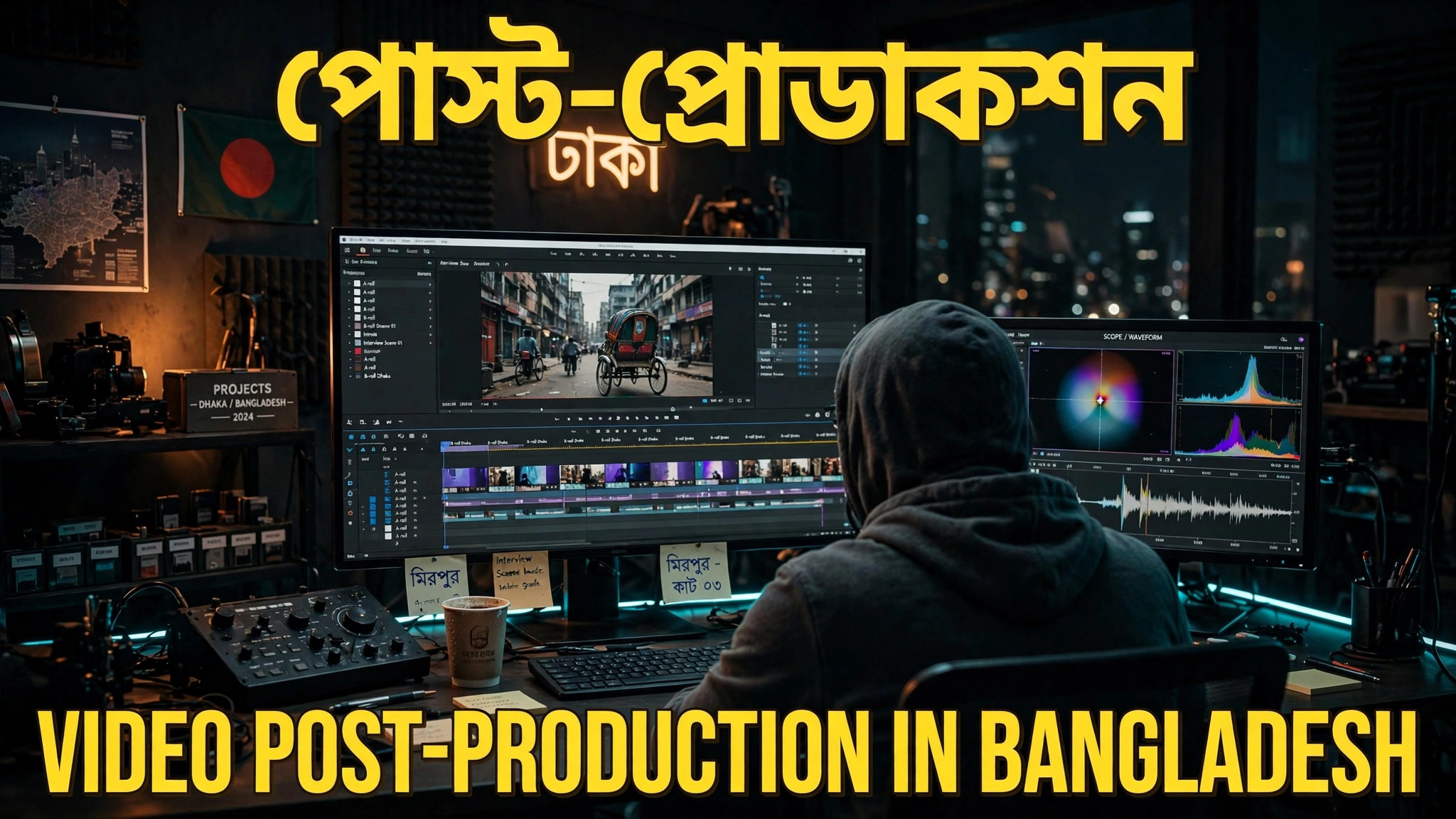
The shoot is the part everyone pictures. But a video is not finished when the cameras stop — it is finished in post-production. Video post-production in Bangladesh is the sequence of stages that turns raw footage into a film a brand can actually publish: editing, colour grading, sound design, graphics and subtitles, then mastering and delivery. If you have ever wondered why a video takes weeks after a one-day shoot, or what you are supposed to be reviewing at each stage, this guide walks through the process in the order it actually happens.
Our pre-production guide covered the decisions before the shoot. This is the other half of the same process — and the two halves depend on each other. A shoot planned with the edit in mind finishes faster and costs less in post; a shoot planned without it pays for the missing decisions later.
1. Ingest and backup: the unglamorous step that protects everything
Before any creative work begins, the footage is copied, checked and backed up. Every card is ingested, every clip is verified as readable, and the material is organised by scene, take and camera. This is also when the sound recorded on set is synced to picture, so the editor works with clean, matched material from the start.
It looks like administration, and it is. But it is also the step that decides whether a lost card or a corrupted file becomes a disaster or a non-event. Ask any production house how your footage is backed up before the shoot, not after something goes wrong. (Our production process guide covers the full workflow from brief to delivery.)
2. The edit: structure first, polish later
Editing happens in passes. The first pass is the assembly — the best takes in story order, roughly the right length, with the obvious mistakes removed. The next pass is the rough cut, where the structure is tested: does the opening hold attention, does the story build, does the ending land? Only once the structure is approved does the editor move to the fine cut, tightening every transition and every pause.
That order matters for your review. At the rough-cut stage, comment on the story, the order and the pacing — not on the colour or the sound, which have not been finished yet. Notes given at the wrong stage get lost, or worse, get applied to a cut that is about to change anyway. Two structured revision rounds are standard practice; use the first on structure and the second on detail.
3. Colour: the look that makes it feel finished
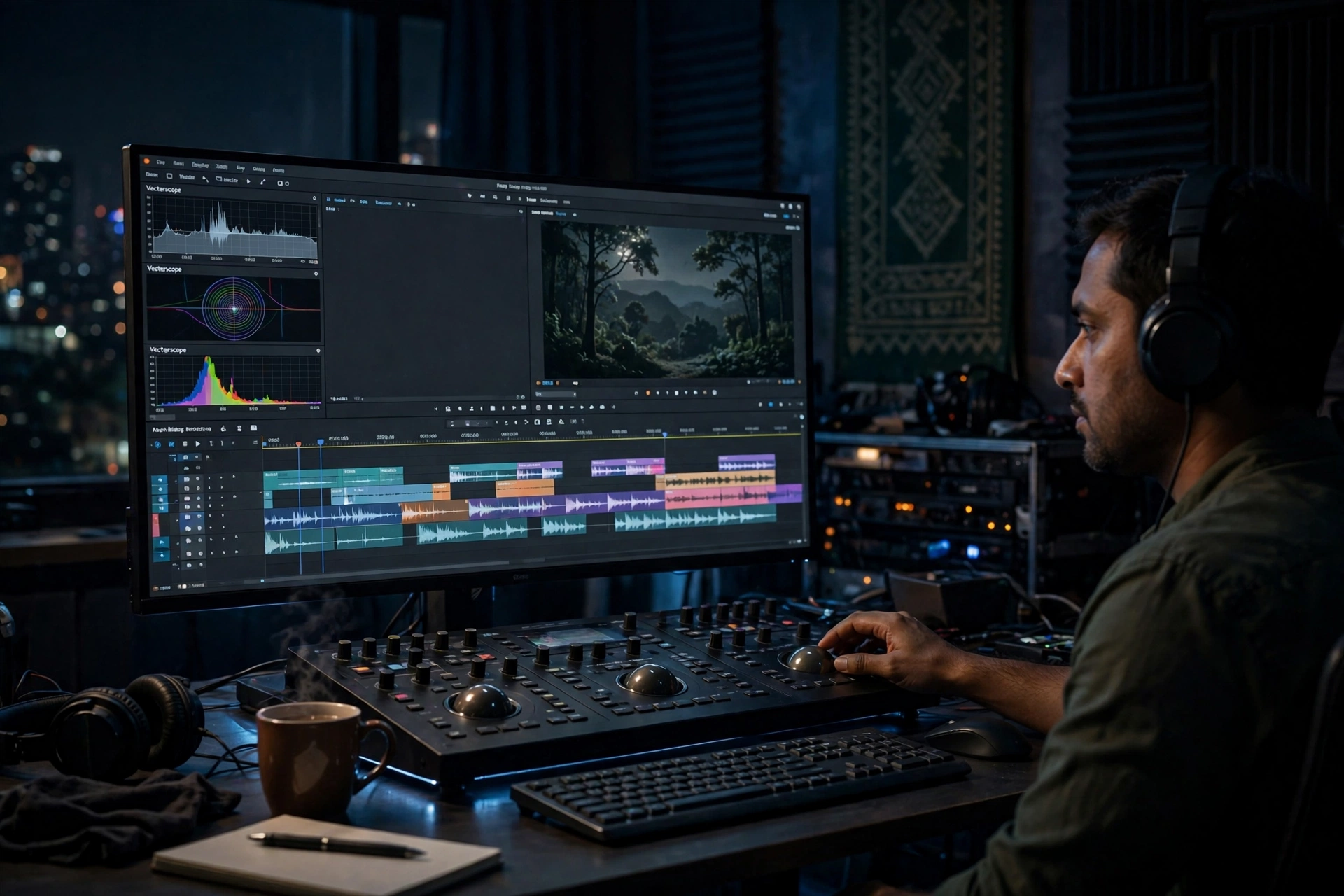
Colour grading is where the footage stops looking like raw camera files and starts looking like a film. It happens in two parts. Correction first: matching shots from different cameras, times of day and lighting setups so the whole video feels consistent. Then the grade: the creative look — warm and golden for an agricultural commercial, clean and neutral for a corporate film, bold and saturated for a music video.
Colour is also where a brand's consistency lives. The same grade applied across a TVC, its online cutdown and its social versions is what makes a campaign feel like one campaign. (Our colour grading guide explains the difference between correction and grading in detail.)
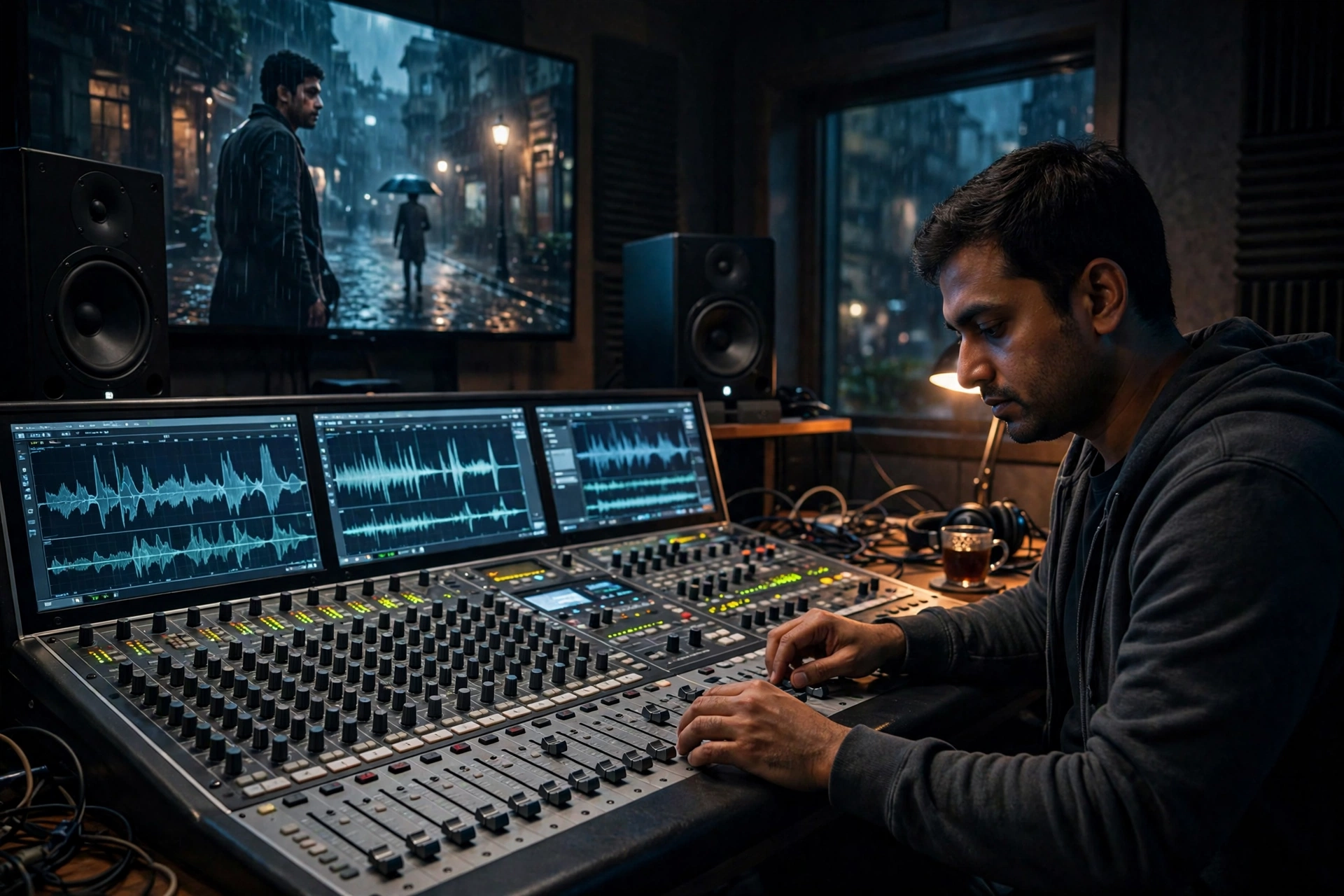
4. Sound: the half you hear
Audiences forgive a slightly soft shot far more readily than they forgive bad sound. Sound design covers dialogue cleanup, music, sound effects and the final mix — balancing voice, music and ambience so the message is clear on a phone speaker as well as in a cinema. For Bangladeshi audiences, this stage also covers Bangla voiceover recording and the mix between Bangla and English versions where a campaign runs in both languages.
Review sound with headphones, not just laptop speakers. Problems that are invisible on a laptop — a hum under the dialogue, music that swallows the voiceover — are obvious on headphones, and they are exactly the problems viewers will notice on their phones. (Our sound design guide covers what a finished mix should contain.)
5. Graphics, subtitles and versions
Motion graphics, titles, lower thirds and end cards are added once the picture is locked — adding them earlier means redoing them every time the edit changes. Subtitles and dubbing belong here too: Bangla subtitles for an English film, or English subtitles for a Bangla one, each timed to the final cut. (Our subtitling and dubbing guide covers the options.)
This is also where the deliverables list from your brief gets made real. One shoot usually produces several versions — a 16:9 master, a 9:16 vertical cut for reels, a 1:1 square for feeds, a short teaser — and each version is a separate piece of post-production, not a free resize. Agree the list before the shoot, not after, or the versioning will be the part that runs over.
6. Mastering and delivery: the final check
Mastering is the last technical pass: the final file is exported to the specification of each platform — broadcast, YouTube, Facebook, cinema — and checked frame by frame. Before you approve a master, check this short list:
- Picture: the grade is consistent across all versions, and no shot is visibly darker or warmer than the one before it.
- Sound: dialogue is clear, music never covers the voice, and the levels match the platform's specification.
- Text: every name, price, phone number and date on screen is correct — and spelled the way your brand spells it.
- Versions: each platform has its own file in the right ratio, and the subtitles match the spoken words.
- Rights: the music is licensed for the platforms and the period you are using it on.
A master approved with an error in it is an error published everywhere at once. The final check is the cheapest quality control in the whole production.
How long does post-production take?
There is no single answer, because post-production time follows the format, not the shoot. A short social edit with one revision round is a different job from a TVC with grading, sound design, graphics and three platform masters — even if both were shot in a single day. The variables that move the timeline are the length and complexity of the edit, the number of versions, the revision rounds, and whether graphics, subtitles or a second language are involved.
What you can control is the review. Clear, consolidated feedback — one set of notes from your side, at the stage each note belongs to — is the single biggest factor in finishing on time. Scattered notes arriving one at a time, or structural notes arriving after picture lock, are how post-production stretches.
What to ask before you commission post-production
- What is included? Editing, colour, sound, graphics, subtitles and mastering are separate crafts. A quote should say which ones are in and which are not. (Our cost guide shows how post-production sits inside a full production quote.)
- How many revision rounds? Two structured rounds are standard. Know what counts as a round, and what an extra round costs.
- Who reviews what, and when? Agree the review stages — rough cut, fine cut, final master — and who on your side gives the single consolidated sign-off at each one.
- What do I get at the end? The masters, in each ratio and language, plus the project files or the raw footage if your agreement covers them. Ask before the work starts.
The shoot ends. The film is made here.
Post-production is where a video earns its quality — or loses it. A good shoot with rushed post looks unfinished; a modest shoot with careful post looks professional. If you are planning a video in Bangladesh, plan the post-production with the same care as the shoot: agree the stages, the reviews and the deliverables up front, and the film that comes back will be the film you briefed.
ভালো লাগলে share করুন — monkey খুশি হবে 🍌
Work with us