16 November 2026 • edit-table diaries
University Video Production in Bangladesh: Campus Films That Fill Seats
চা নিয়ে বসুন — ৪ মিনিটের পড়া ☕
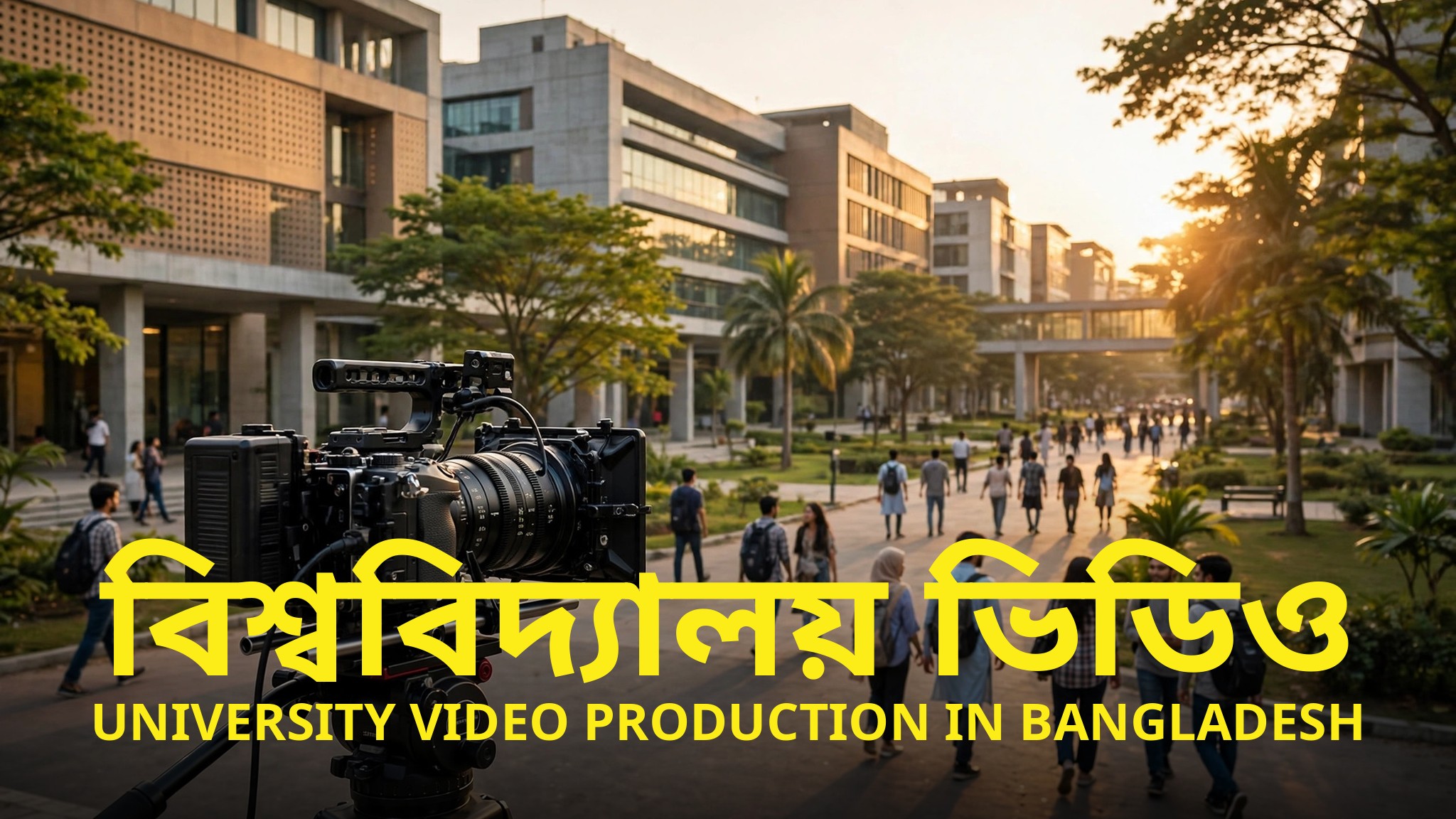
A parent in Rangpur and a student in Chattogram will both judge a university by the same thing before they ever visit it: the video on its website. University video production in Bangladesh is how a university shows what its campus actually feels like — the classrooms, the labs, the teachers, the students — to families who may never set foot there before admission day. In a country where dozens of private universities compete for the same applicants, the institutions that recruit best are the ones whose films answer the real questions: what will I learn here, who will teach me, and what will my life here look like?
The formats that recruit
The admissions film (2–3 minutes). The flagship asset: one film that carries the whole story — campus, faculty, students, outcomes — in the order a prospective student actually thinks about them. This is the film that sits on the admissions page and gets shared in family WhatsApp groups.
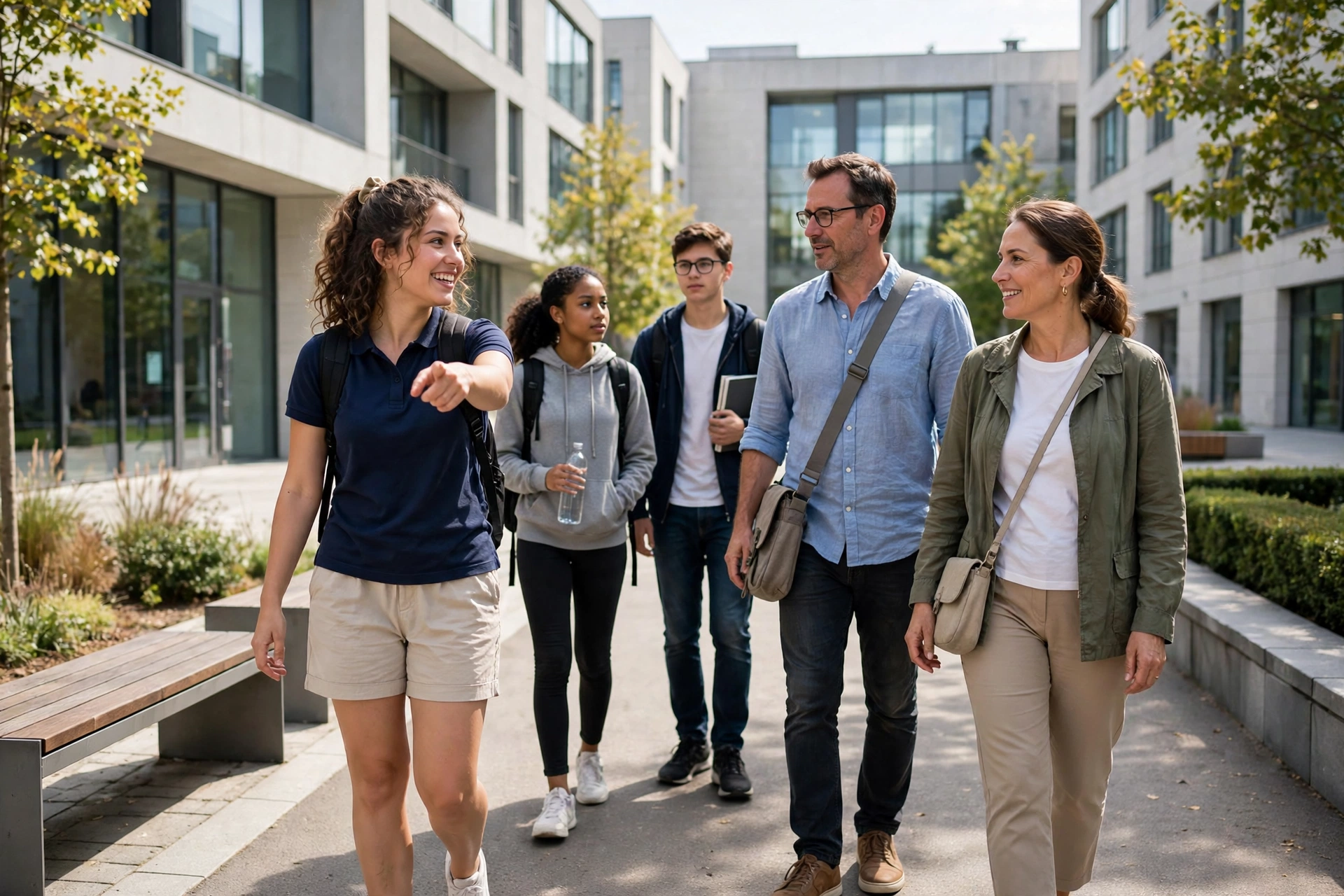
The campus tour. A guided walk through the real campus — classrooms, labs, library, cafeteria, sports facilities — filmed as a student would actually experience it. (Our 360° virtual tour guide covers the interactive version; a filmed tour is the warmer, story-led companion to it.)
Faculty and student stories. Short interviews with real teachers and real students, in their own words, about one course, one project, one outcome. Nothing persuades a parent like a student who sounds like their own child. (Our testimonial video guide covers the interview craft.)
Department and programme films. One focused film per flagship department — CSE, BBA, Pharmacy, English — showing the labs, the faculty, and what graduates go on to do. These are the films that convert a general enquiry into a specific application.
Event and convocation coverage. Orientation, cultural week, convocation — filmed properly, these become the year's recruitment content and the alumni community's shared memory. (Our corporate event videography guide covers the multi-camera craft.)
The craft specifics
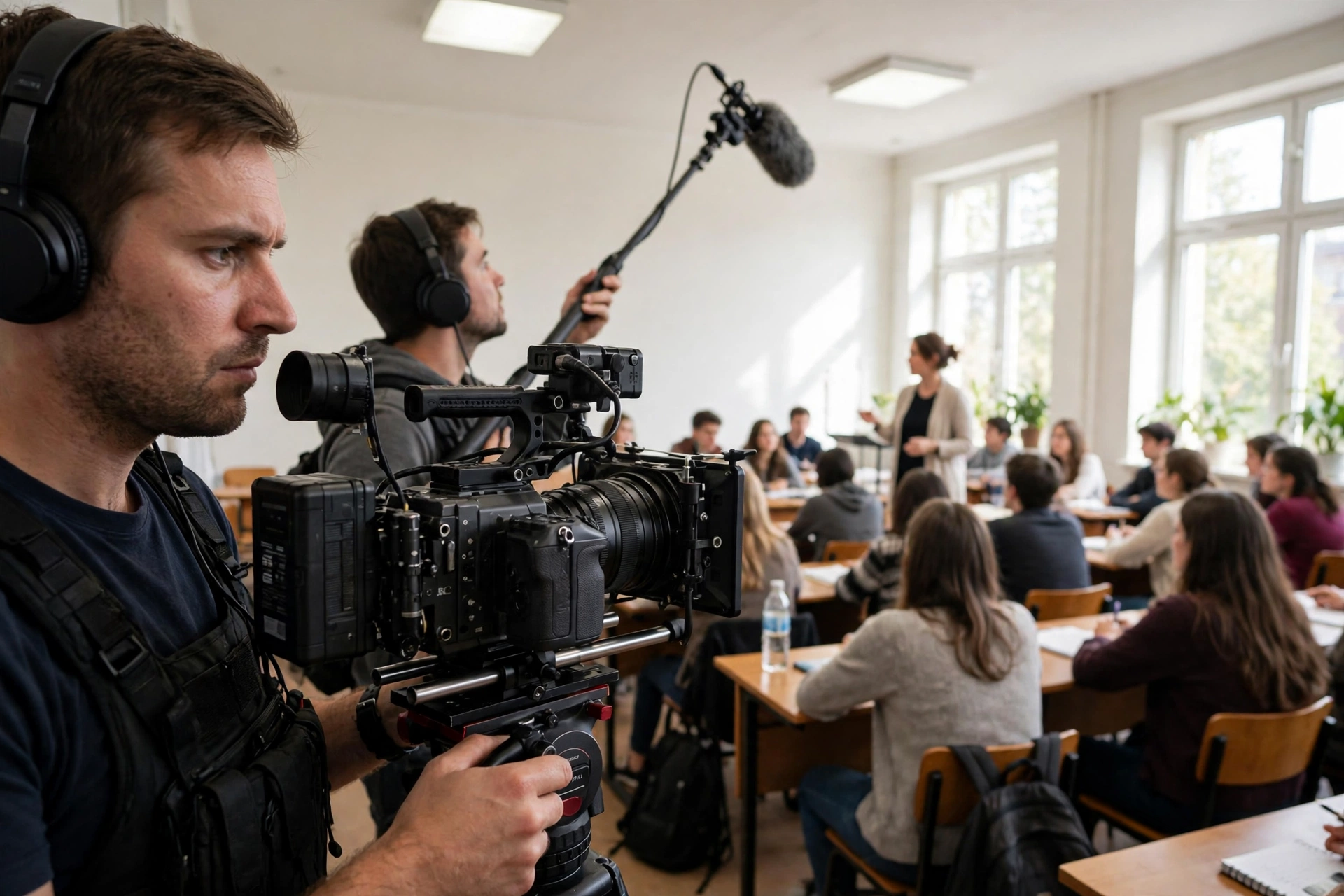
- Film during a real class, not an empty building. An empty classroom tells a parent nothing. Shoot while teaching is happening — with the university's permission and the students' consent — so the film shows learning, not architecture.
- Sound matters more than drone shots. A sweeping aerial of the campus opens the film; the interviews carry it. Record faculty and students with proper microphones in quiet rooms, not over corridor noise.
- Permissions are part of pre-production. Written permission from the university administration, filming scheduled around classes and exams, and consent from every student who appears on camera. Sort this before the shoot day, not on it. (Our location scouting guide covers permissions in general; universities add their own administration step.)
- Show outcomes, not just facilities. Labs and libraries are table stakes. The differentiator is what students do there — the project, the competition win, the internship, the first job. Ask for the stories before you write the script.
- Cut for the platforms parents actually use. The full film lives on the website and YouTube; 30–60 second vertical cuts go to Facebook and Instagram, where admission decisions are discussed at home. Plan the cutdowns before the shoot, not after.
Common mistakes
- A film that is only drone shots of buildings — beautiful, and it says nothing about teaching
- Scripted lines from students — parents can tell in seconds; real answers always win
- Filming in the holidays when the campus is empty — the film looks abandoned, not aspirational
- One film for every audience — applicants, parents, and alumni need different cuts of the same shoot
- No subtitles — many parents watch on mute on their phones; Bangla and English subtitles are not optional
The admissions test
Before the next admission season: can a family in another district watch your film and picture their child in your classrooms, taught by your teachers, with a clear next step to apply? One shoot, planned around real classes and real students, can produce the admissions film, the campus tour, the department cuts, and a semester of social content — the difference is just planning.
For the budget side — what drives the price of a production like this — see our video production cost guide. For the brief a production house needs before quoting, see our brief-template guide on the blog.
ভালো লাগলে share করুন — monkey খুশি হবে 🍌
Work with us