18 November 2026 • edit-table diaries
Retail Video Production in Bangladesh: Store Films That Bring Customers In
চা নিয়ে বসুন — ৪ মিনিটের পড়া ☕
Retail Video Production in Bangladesh: Store Films That Bring Customers In
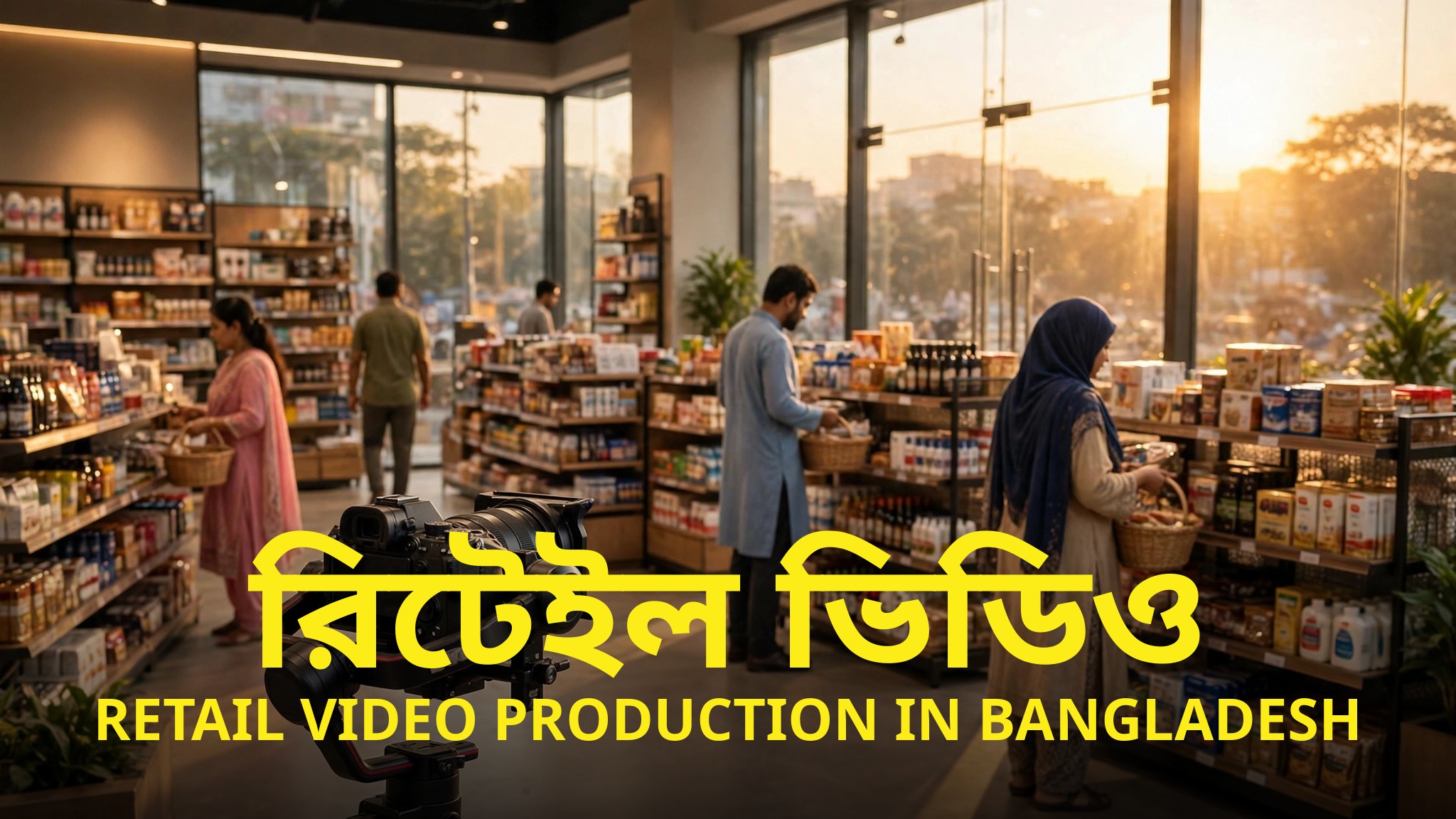
A shopper in Khulna decides whether to walk into a store long before they reach the door — they have already seen it on Facebook, on a mall screen, or in a friend's shared reel. Retail video production in Bangladesh is how a store, showroom, or shopping mall shows what it actually feels like to shop there: the shelves, the products, the people, the offers — to customers across Bangladesh who may never have visited that branch. In a market where every retail chain competes for the same weekend footfall, the stores that fill up are the ones whose films answer the real questions: what will I find here, why is it worth the trip, and what is on offer right now?
The formats that fill a store
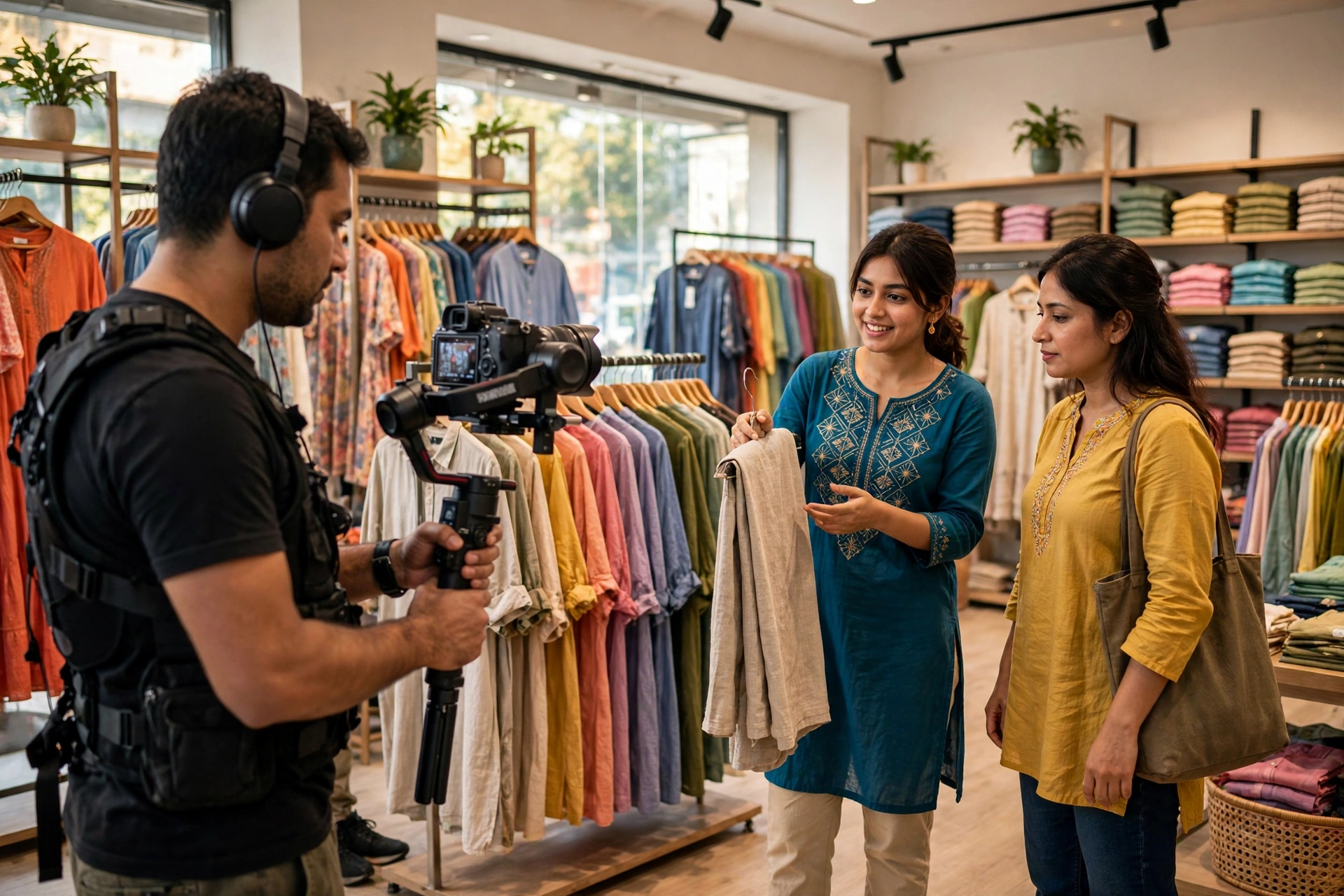
The store film (60–90 seconds). The flagship asset: one film that carries the whole store — the entrance, the best-selling sections, the staff, the atmosphere — in the order a shopper actually experiences it. This is the film that runs on the store's Facebook page, on in-store screens, and in paid ads before a festival or a sale.
The showroom walkthrough. A guided tour of a showroom — furniture, electronics, automobiles, jewellery — filmed as a customer would actually browse it, with the products in use rather than sitting on a shelf. (Our 360° virtual tour guide covers the interactive version; a filmed walkthrough is the warmer, story-led companion to it.)
Offer and festival films. Short, fast films built around one offer — Eid collections, Pohela Boishakh sales, winter clearance, a new branch opening. These are the films with a deadline, and they need to be shot and delivered fast enough to run while the offer is still live.
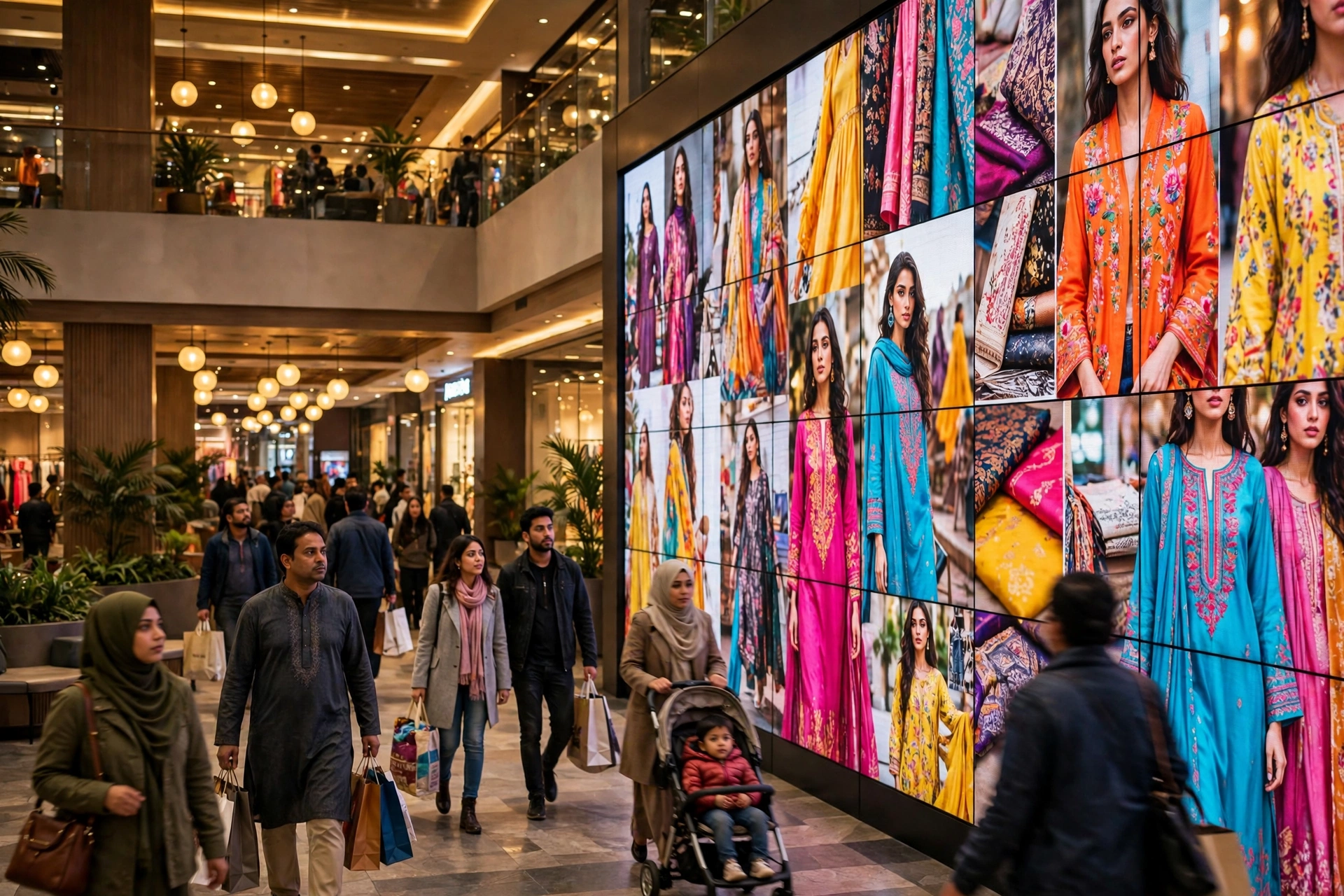
In-store screen content. Silent, looping video for the screens inside the store and at the mall entrance — new arrivals, bestsellers, the offer of the week. No sound, big text, and a loop that works whether a shopper watches for three seconds or three minutes.
Staff and service stories. Short films with the real people behind the counter — the salesperson who knows every product, the tailor, the technician — in their own words. Nothing persuades a first-time visitor like a store that feels human before they walk in. (Our testimonial video guide covers the interview craft.)
The craft specifics
- Film during real trading hours, not an empty store. An empty shop tells a customer nothing. Shoot while the store is open — with the management's permission and the shoppers' consent — so the film shows a place people actually want to be.
- Shoot for the screen it will play on. The festival film is vertical for Facebook and Instagram; the in-store loop is horizontal, silent, and readable from ten feet away; the mall-entrance screen needs one big message, not five small ones. Plan the cutdowns before the shoot, not after.
- Show the products in use. A sari on a hanger is inventory; a sari being worn is a reason to visit. A sofa in a showroom is furniture; a family sitting on it is a home. Film products the way customers will actually use them.
- Permissions are part of pre-production. Written permission from the store or mall management, filming scheduled around peak hours and stock deliveries, and consent from every shopper who appears recognisably on camera. Sort this before the shoot day, not on it. (Our location scouting guide covers permissions in general; malls and retail chains add their own management step.)
- Festival timing is the whole game. Eid, Puja, Pohela Boishakh, winter sale season — a retail film that lands after the festival has started is already late. Work backwards from the campaign date and leave room for approvals.
Common mistakes
- A film that is only slow pans across empty shelves — beautiful, and it says nothing about shopping there
- One film for every screen — the in-store loop, the Facebook ad, and the mall screen need different cuts of the same shoot
- Filming after closing when the store is empty — the film looks closed, not inviting
- No prices or offers in the film — a shopper who cannot see a reason to visit today will visit "someday", which means never
- No subtitles — many shoppers watch on mute on their phones; Bangla and English subtitles are not optional
The footfall test
Before the next festival season: can a customer in another district watch your film and picture themselves walking through your store, finding what they need, with a clear reason to visit this week? One shoot, planned around real trading hours and real customers, can produce the store film, the showroom walkthrough, the offer cuts, and the in-store loop — the difference is just planning.
For the budget side — what drives the price of a production like this — see our video production cost guide. For the brief a production house needs before quoting, see our brief-template guide on the blog.
ভালো লাগলে share করুন — monkey খুশি হবে 🍌
Work with us